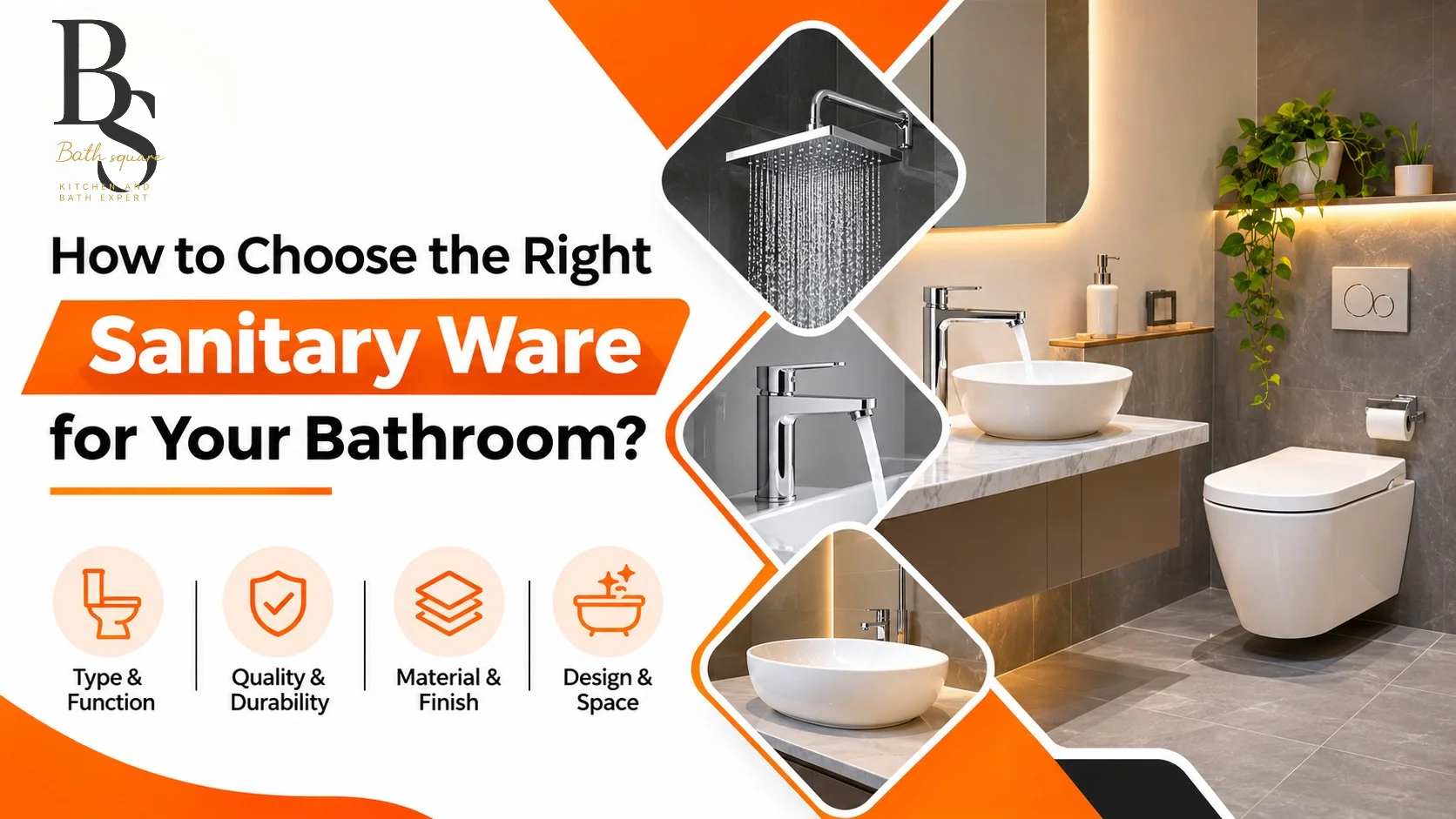
A cracked basin or a badly fitted toilet is easy to ignore on day one. By month six, it’s all you notice. And once the tiles are fixed and the plumber has gone, you can’t just swap it out.
Most people only start thinking about how to choose bathroom Sanitary ware when they’re already standing in a shop, confused by ten similar-looking toilets. This blog will help you sort that out before you get there. We’ll go through the basics, five things worth checking, and the mistakes people regret later. It’s written for regular homeowners, not plumbers. Let’s get started!
What Is Sanitary ware?
Sanitary ware is the ceramic fittings fixed in your bathroom, like the toilet and the washbasin. Most of it is vitreous china, which is hard, smooth and doesn’t soak up water. These are the main types of bathroom Sanitary ware you’ll see in shops:
- Water closet (WC): floor-mounted or wall-hung, in Indian or Western style
- Washbasin: wall-hung, countertop, pedestal or semi-recessed
- Urinal: mostly used in shared or commercial spaces
- Cistern: the flush tank, either concealed or exposed
- Bidet: a separate fixture for washing up
Most homes need only a WC, a washbasin and a cistern. The rest depend on space and habit.
Why Your Bathroom Deserves the Right Sanitary Ware
You use the toilet and washbasin many times a day, every day, for years. So a Wrong choice doesn’t stay a small problem for long. It shows up as stains that won’t go, a Flush that requires multiple attempts, or a basin that splashes water everywhere. As per the report of The Business Research Company, The global sanitary ware market will increase from $41.85 billion in 2025 to $44.4 billion in 2026 due to increasing demand for sanitary products across the globe.
The right Sanitary ware Reduces repair and maintenance costs, Helps reduce water consumption and bills, stays hygienic and makes the daily routine less annoying. Spending a little more thought now saves a lot later. Similarly, understanding the things to consider when buying bathroom fittings, such as material quality, durability, finish and compatibility, can help you make better decisions when planning your bathroom.
Top 5 Ways to Choose the Right Sanitary ware for Your Bathroom
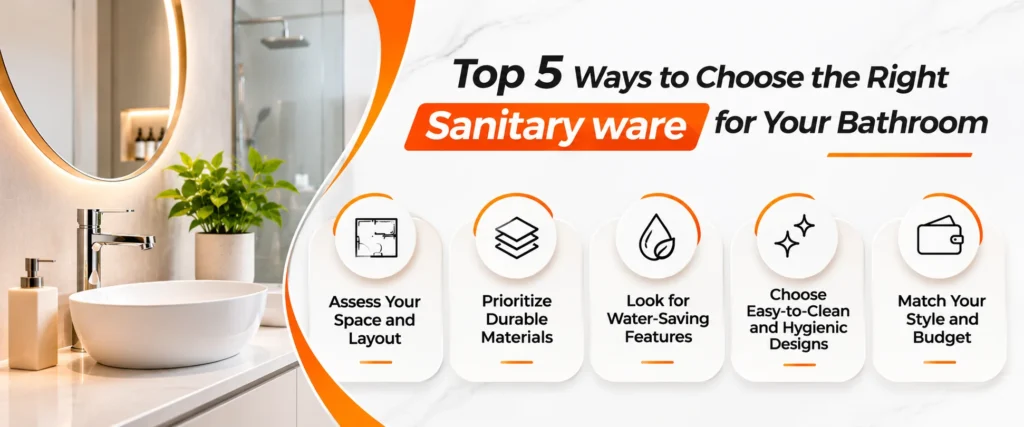
Use this bathroom Sanitary ware selection guide and go through these five points one by one before you pay for anything.
1. Assess Your Space and Layout
Take a tape measure to the bathroom before you look at a single catalogue. Many Indian bathrooms are small, and a bulky toilet or basin makes the room feel tight. A few bathroom washbasin selection tips for small spaces:
- Go for a wall-hung or corner basin when space is tight
- Leave enough room in front of the toilet to sit and stand comfortably
- Check where your drain and water points already sit
2. Prioritize Durable Materials
Look for vitreous china with a smooth, even glaze. It resists stains and doesn’t soak up water, so it holds up for years. Thin glaze on cheaper ceramic tends to stain, roughen or crack much sooner. Check the surface for tiny pinholes or wavy patches, and run your hand over it. A good piece feels smooth and solid. Ask about the warranty too, because proper brands stand behind their products.
3. Look for Water-Saving Features
Water isn’t unlimited in many Indian cities, and your bill shows it. So check how much each flush actually uses. Things to look at:
- A dual-flush system with half and full flush
- Litres per flush clearly written in the product details
- A cistern that doesn’t leak quietly
A leaking cistern can waste a lot of water, and most people only find out when the bill comes. Ask the dealer to show you the flush working.
4. Choose Easy-to-Clean and Hygienic Designs
Hard water is common in Indian homes, and it leaves white patches on basins and toilets. A design that wipes clean easily saves you a lot of scrubbing. Look for:
- Rimless toilets, with no hidden rim to collect dirt
- A smooth glaze with no rough spots
- Concealed trapways that are easy to wipe
- Wall-hung models, so you can mop underneath
Less scrubbing means the bathroom stays fresh with less effort.
5. Match Your Style and Budget
Modern bathroom Sanitary ware usually means clean lines, slim shapes and calm colours like white, ivory or matt shades. Look at a few bathroom Sanitary ware designs and pick one that goes well with your tiles and fittings. You should also know how to choose the right bathroom faucet to ensure the tap design, finish and functionality complement your washbasin and overall bathroom style. On budget, fix a number first. Spend more on the toilet and cistern, since you use them daily. A fairly priced piece from a trusted brand beats a cheap one you’ll replace in two years.
Go through these five points calmly, and you’ll skip most of the regret that comes after the fitting is done.
Common Mistakes to Avoid When Choosing Sanitary ware
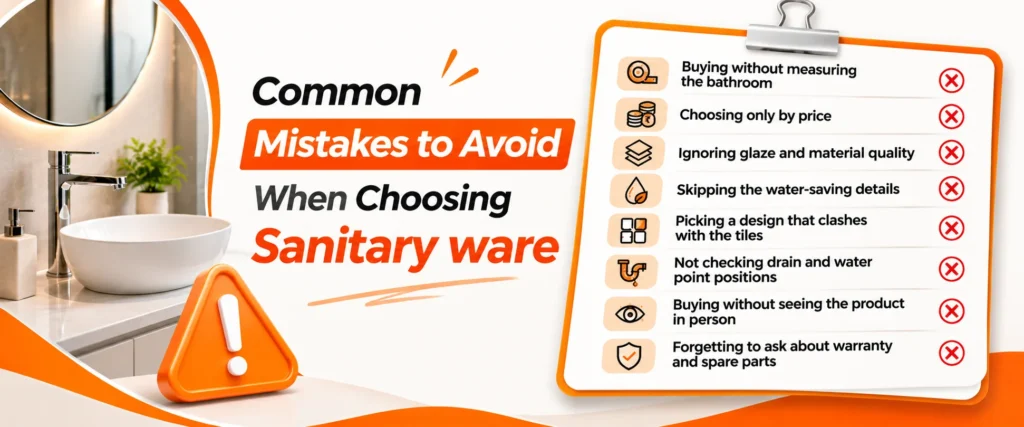
Even careful buyers slip up. These are the mistakes people make most often, so you can avoid them early on.
- Buying without measuring the bathroom
- Choosing only by price
- Ignoring glaze and material quality
- Skipping the water-saving details
- Picking a design that clashes with the tiles
- Not checking drain and water point positions
- Buying without seeing the product in person
- Forgetting to ask about warranty and spare parts
Avoid these slips and your bathroom stays trouble-free for years. A little checking now saves a lot of money later.