A bathroom may look simple, but choosing the right fittings needs careful planning. Faucets, showers, mixers, diverters, health faucets, and other fittings are used every day. A poor choice can lead to leaks, weak water flow, difficult cleaning, or costly replacement later.
At the same time, you do not need to buy the most expensive fittings to create a good bathroom. The better approach is to check how a product is made, whether it suits your plumbing and water pressure, how easy it is to maintain, and what warranty or service support is available.
If you are building a new bathroom or renovating an old one, here are the top 7 things to keep in mind when buying bathroom fittings.
1. Check Your Bathroom Layout Before Buying Anything
Do not choose a tap or shower only because it looks good in a showroom. First, understand where and how it will be installed. A bathroom may need different fittings for:
- Wash basin
- Shower area
- Bathtub
- Toilet area
- Hot and cold water lines
You may also have to choose between wall-mounted and deck-mounted fittings.
For a basin faucet, for example, the mounting style needs to match the basin and its available tap holes. Jaquar’s faucet-buying guidance also recommends checking whether the faucet mounting style matches the sink or basin configuration.
What Should You Check?
Before shopping, note:
- Basin type and size
- Number of tap holes
- Hot and cold water points
- Shower position
- Pipe locations
- Wall thickness for concealed fittings
- Available installation space
If you are using a concealed diverter or in-wall fitting, finalise the product before the wall and tile work is completed. Changing concealed plumbing after tiling can make the job more difficult and expensive.
Simple tip: Ask your plumber to check your bathroom layout before ordering all fittings.
2. Pay Attention to Material and Internal Parts
The outside shine of a faucet does not tell you everything about its quality. Internal parts matter just as much.
BIS standard IS 8931:2021 covers material, construction, and performance requirements for copper-alloy taps, combination taps, stop valves, and single-lever mixers used for water services.
When comparing bathroom taps and fittings, check what material is used in the main body and what kind of cartridge or valve is fitted inside.
Look for a Good Cartridge
The cartridge controls water flow and, in mixer taps, helps control hot and cold water.
Ceramic disc cartridges are commonly used in good-quality modern faucets because they offer smooth operation and help control leaks. Jaquar also recommends solid brass construction and ceramic disc cartridges when buyers are looking for durability. Do not choose only by weight, shine, or a low price.
Ask the seller:
- What is the main body made from?
- Which cartridge is used?
- Are internal spare parts available?
- Is the product covered by warranty?
Good internal parts can make a major difference because faucets are opened and closed many times during normal daily use.
3. Check Your Home’s Water Pressure
This is one of the most important parts of any bathroom fittings buying guide, yet it is often ignored. Not every faucet or shower works in exactly the same way at every water pressure.
Water pressure can depend on:
- Overhead tank height
- Pump or pressure system
- Number of floors
- Pipe size
- Plumbing layout
- Type of shower or faucet
BIS IS 8931:2021 specifies requirements for covered taps and valves operating within defined water-pressure conditions, showing why pressure is an important performance factor for these products.
Some products may also have their own minimum pressure requirements. Kohler, for example, publishes recommended pressure conditions as part of its installation requirements for certain fittings.
What Should You Do?
Before buying a rain shower, body shower, shower Panels, mixer, or other fitting that needs good pressure, ask your plumber to check the available water pressure. Also check the manufacturer’s product sheet. A large shower head may look impressive, but it will not give the expected experience if your plumbing cannot provide the required flow and pressure.
Best rule: Match the fitting to your actual plumbing, not just to the showroom display.
4. Choose Water-Saving Bathroom Fittings
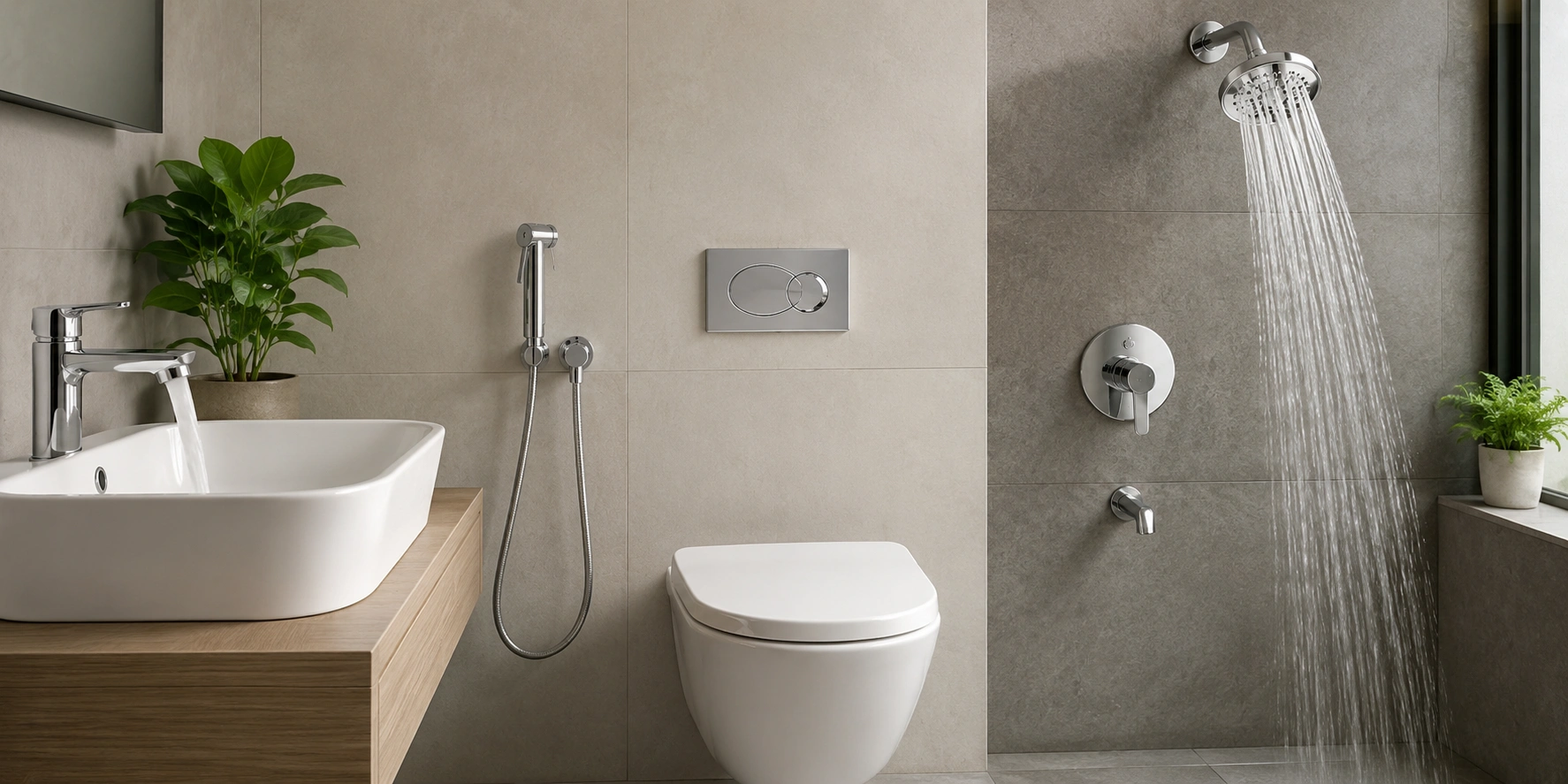
Bathrooms can use a large amount of water every day, so water efficiency should be considered when choosing new fittings. One useful feature to look for is an aerator.
An aerator is fitted at the outlet of a faucet. It mixes air into the water stream and can reduce water use while keeping the flow comfortable.
BIS also has standards covering requirements for water-efficient plumbing products, including sanitary fittings.
Look for Features Such As:
- Faucet aerators
- Flow regulators
- Efficient shower heads
- Sensor faucets where suitable
- Products designed for controlled water flow
Water-saving fittings can be especially useful in homes with many family members, hotels, offices, and other places where bathrooms are used frequently. However, do not simply choose the product with the lowest flow. The fitting should still give enough water for comfortable use.
5. Choose a Finish You Can Maintain Easily
Chrome is no longer the only option for bathroom fittings. Modern bathrooms may use finishes such as:
- Chrome
- Black
- Gold
- Brushed finishes
- Nickel-toned finishes
- Other coloured finishes
The right choice depends on your bathroom design and how much cleaning you are willing to do.
For example, dark finishes can create a bold look, while chrome is easy to match with many bathroom styles.
Whatever you choose, check the manufacturer’s care instructions. Hard-water minerals, soap, and water marks can build up on fittings over time. Jaquar’s maintenance guidance recommends regular wiping because water residue and deposits left on faucet surfaces can affect their appearance over time.
Keep the Design Consistent
Try to keep the main visible fittings in similar finishes. For example, your:
- Basin faucet
- Shower
- Diverter plate
- Health faucet
- Towel holder
- Robe hook
This creates a cleaner and more planned bathroom design. Avoid choosing a special finish only because it is currently fashionable. Think about how it will look with your tiles, basin, mirror, and overall bathroom style.
6. Check Warranty, Service and Spare Parts
Bathroom fittings may work for years, but parts such as cartridges, seals, aerators, and other components may eventually need attention. That is why after-sales support matters.
Before buying, check:
- Product warranty
- What the warranty covers
- Service availability in your city
- Availability of spare parts
- Installation support
- Complaint process
Warranty periods differ widely between brands and even between product categories.
For example, Kohler India publishes separate warranty terms for faucets, fittings, sanitaryware, and other bathroom products, while CERA also provides warranty and after-sales information for its bathroom products.
A long warranty can be useful, but do not look only at the number of years. Read what is actually covered. Because the finish, cartridge, accessories, electronic parts, and main body may have different warranty terms.
Also keep:
- Original invoice
- Product model number
- Warranty card or registration
- Installation details
These can make future service easier.
7. Set a Budget for the Complete Bathroom, Not One Tap
It is easy to overspend when buying bathroom fittings for a home. A single premium faucet may fit your budget, but remember that a full bathroom can require several products. Your list may include:
- Basin faucet
- Shower
- Diverter or mixer
- Spout
- Health faucet
- Angle valves
- Waste coupling
- Towel holder
- Soap holder
- Other accessories
So instead of deciding, “I can spend ₹5,000 on a faucet,” first decide your total bathroom fitting budget. Then divide it according to importance.
Spend more on fittings that handle water every day and where reliability matters most. Decorative accessories can be chosen later if the budget becomes tight.
Remember Installation Costs
Your final budget may also include:
- Plumber charges
- Concealed installation
- Extra valves or connectors
- Pipe changes
- Drilling or wall work
- Future maintenance
A fitting that costs less to buy may not always be cheaper if spare parts are difficult to find or installation needs major changes. Think about the total cost of owning and maintaining the fitting, not only its showroom price.
Quick Bathroom Fittings Buying Checklist
Before placing your order, check these seven points:
- Size and installation: Does it fit your basin and plumbing layout?
- Material: Is the body and internal mechanism made for regular use?
- Water pressure: Will it work properly with your home’s water supply?
- Water saving: Does it have an aerator or controlled-flow feature?
- Finish: Will it match your bathroom and remain easy to clean?
- Warranty: Is service and spare-part support available?
- Budget: Have you calculated the cost of all fittings and installation?
Taking a few minutes to check these points can help you avoid buying products that look attractive but do not suit your bathroom.