Choosing a kitchen sink may seem to be an easy task – until you find yourself standing in a showroom trying to pick out of 20 varieties and having no clue about which one to choose.
Indian kitchens are unlike other kitchens in the world in many ways. We prepare three meals daily, face issues with stains from haldi, hot pressure cookers, messes due to masala, and hard water leading to white patches on all surfaces. Any sink that we choose has to go through all of this, every single day.
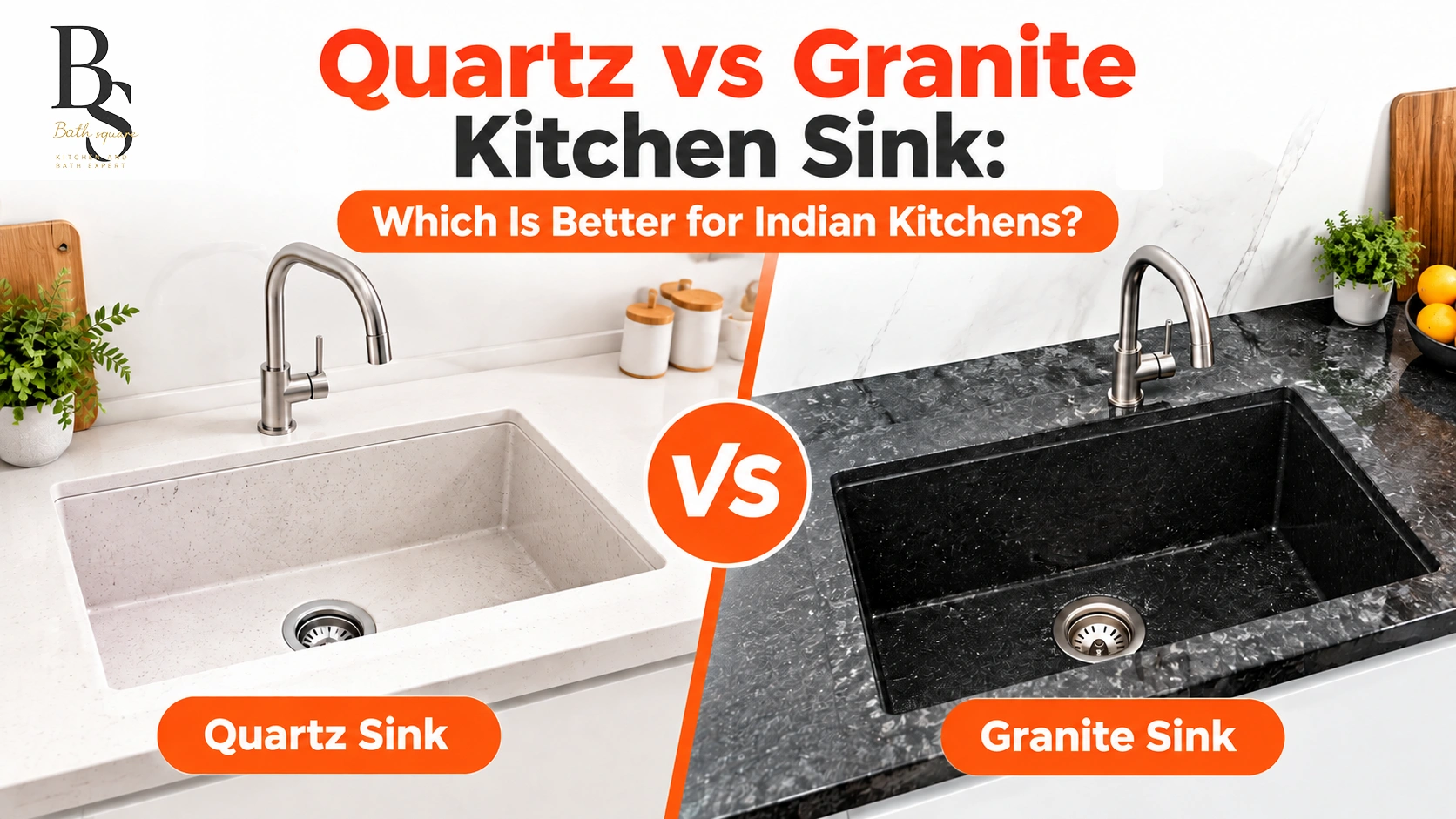
Right now, there are two materials that rule kitchen discussions throughout India – quartz kitchen sinks and granite composite kitchen sinks. They both offer high quality and look great. However, these two products differ greatly in characteristics, which really matter in Indian cuisine.
In this article, you will learn everything you need to know about the two products in question, their comparisons based on Indian cooking habits, and what product you should choose. Let’s get started!
Quick Answer: For most Indian kitchens, a quartz kitchen sink is the better choice. It is non-porous, handles haldi and oil stains better, requires less maintenance, and works well in cities with hard water like Jaipur, Delhi, and Ahmedabad. Granite composite sinks are slightly better at handling extreme heat but require more care over time. If you cook heavy Indian meals daily and want a sink that stays looking new with minimal effort – quartz wins.
What Is a Quartz Kitchen Sink?
A quartz kitchen sink is not made from 100% natural stone. It is an engineered product made from approximately 80% crushed natural quartz crystals mixed with 20% acrylic resin and pigments. This combination gives it a dense, non-porous surface that is tough, uniform in colour, and resistant to stains.
Because it is engineered, it comes in precise sizes and consistent shapes – which makes it ideal for modern kitchen sinks for modular kitchens where exact fitting matters a lot.
Carysil Kitchen Sink, one of India’s most trusted sink options and available at Balaji Bath Square in Jaipur, makes their quartz sinks from exactly this blend – 80% natural quartz and 20% acrylic resin – giving you a surface that is strong, smooth, and easy to live with every day.
Key characteristics of a quartz sink:
- Non-porous surface – does not absorb stains or bacteria
- Available in multiple colours – black, white, grey, beige
- Smooth matte finish – looks premium in modern kitchens
- Sound dampening – quieter than steel sinks during use
- Does not need sealing – ever
What Is a Granite Kitchen Sink?
A granite composite sink is made from approximately 75 to 80% granite stone dust mixed with 20 to 25% acrylic resin. Unlike a quartz sink, granite sinks use actual crushed granite – which gives them a slightly textured, natural stone-like appearance.
Granite composite sinks are heavier and denser than quartz sinks. They have excellent heat resistance and a premium look that works well in both traditional and contemporary Indian kitchen designs.
Key characteristics of a granite composite sink:
- Made from crushed granite and resin
- Slightly textured surface – natural stone appearance
- Very high heat resistance
- Heavy and extremely durable
- Available in dark colours – black, charcoal, brown
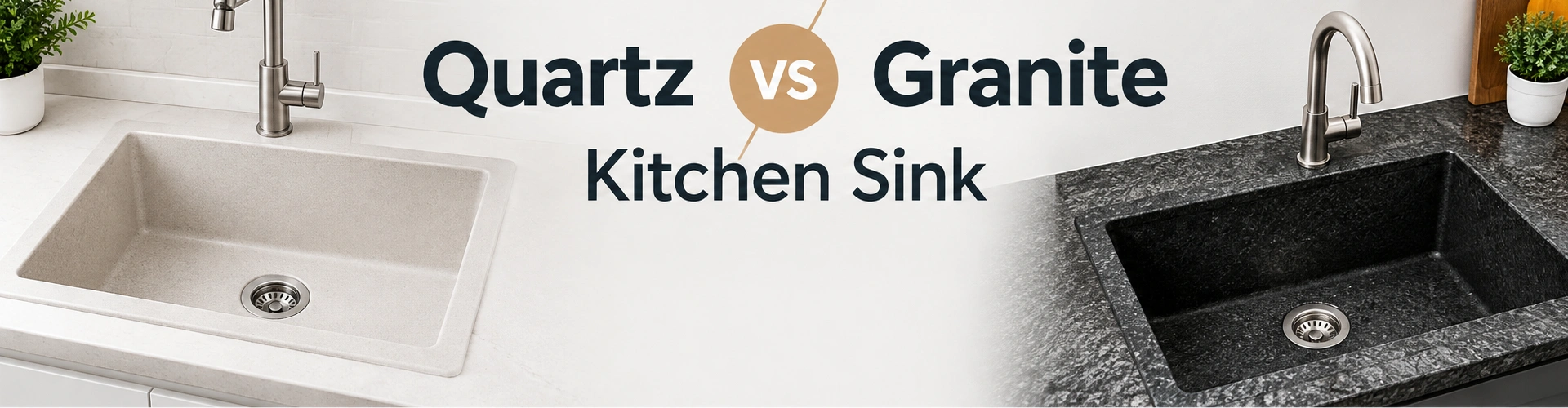
Quartz vs Granite Sinks – Detailed Comparison
| Factor | Quartz Kitchen Sink | Granite Composite Sink |
| Material | 80% quartz + 20% resin | 75–80% granite + 20–25% resin |
| Surface | Smooth, non-porous | Slightly textured |
| Heat Resistance | Good – avoid direct hot pots | Excellent – handles hot utensils better |
| Stain Resistance | Excellent – haldi and oil wipe off easily | Good – but textured surface can trap stains |
| Hard Water | Handles well – easy to descale | Slightly more prone to white patches |
| Maintenance | Very low – mild soap and water | Low – but needs occasional deeper cleaning |
| Weight | Medium | Heavy – needs strong cabinet support |
| Price in India | ₹4,000 to ₹25,000 | ₹6,000 to ₹30,000+ |
| Best For | Modern modular kitchens, daily Indian cooking | Heavy-use kitchens, traditional setups |
| Sealing Required | No | No |
Which Sink Handles Heat Better?
This is a question every Indian homeowner asks – and for good reason. In our kitchens, we regularly place hot pressure cookers, hot kadais, and boiling pots near or in the sink.
Granite composite sinks handle extreme heat slightly better than quartz sinks. The higher density of granite particles in the material gives it more natural heat tolerance. You can generally place hot utensils in a granite composite sink without worrying too much.
Quartz sinks are also heat resistant – but they contain resin which can be sensitive to sudden extreme temperature changes. This is called thermal shock. Placing a 100 degree pressure cooker directly into a cold quartz sink repeatedly over time can stress the resin.
Practical tip for Indian kitchens: Always let your hot pressure cooker or kadai cool for 2 to 3 minutes before placing it directly in either sink. This simple habit protects both quartz and granite sinks and extends their life significantly.
Verdict: Granite composite wins on heat resistance – but only marginally. With simple habits, a quartz sink handles Indian kitchen heat just fine.
Quartz vs Granite: Which Is Easier to Clean?
In an Indian kitchen, cleaning is not optional – it happens multiple times every day. Haldi stains, oil, masala powder, chai spills, and food residue are a daily reality.
A quartz kitchen sink is easier to clean because its surface is smooth and non-porous. Stains from turmeric, oil, and spices sit on the surface – they do not sink in. A simple wipe with mild dish soap and warm water is enough for daily cleaning.
A granite composite sink has a slightly textured surface. That texture is what gives it the premium stone-like look – but it also means stains and food particles can get into the tiny surface grooves. You may need to scrub a little more to get it completely clean.
Both sinks should be cleaned with mild soap and a soft sponge only. Harsh chemicals like bleach, strong acids, or abrasive scrubbers damage both surfaces and should be avoided completely.
Verdict: Quartz wins for daily cleaning ease – especially for busy Indian kitchens where speed matters.
Which Sink Is Better for Hard Water?
If you live in Jaipur, Delhi, Ahmedabad, or most of North India – you already know what hard water does. It leaves white chalky deposits on everything – your taps, your tiles, your sink.
This is where hard water resistant kitchen sinks become really important.
Quartz sinks handle hard water better because their smooth non-porous surface prevents mineral absorption. White limescale deposits form on the surface – not inside it – which means they can be removed with a mild descaler without damaging the finish.
Granite composite sinks, because of their slightly textured surface, can accumulate mineral deposits in the micro-grooves over time. It is not impossible to clean – but it requires more consistent maintenance to prevent white patches from building up.
Carysil even makes a dedicated 3-in-1 care kit for their quartz sinks – including a limescale descaler specifically designed for homes with hard water. That is how common this problem is across Indian cities.
Verdict: Quartz is the better choice for hard water resistant kitchen sinks – especially in cities like Jaipur where hard water is a daily challenge.
Which Is Better for Indian Cooking?
This is the most important question – and the answer requires thinking about how Indian cooking actually works.
Indian cooking involves:
- Daily use of turmeric, mustard oil, red chilli, and other strongly pigmented spices
- Multiple rounds of washing heavy vessels, pressure cookers, and kadais
- Hot utensils placed near or in the sink regularly
- Hard water in most Indian cities
- Three meals a day – sometimes more
Considering all of this, here is how each sink performs:
A quartz kitchen sink handles haldi, oil, and masala stains excellently because of its non-porous surface. It is easy to clean after every meal. Hard water deposits come off easily. The smooth surface does not give bacteria any place to hide – which matters a lot for kitchen hygiene.
A granite composite sink handles heat slightly better and has a more natural stone look. But its textured surface requires more consistent cleaning to prevent spice and oil residue from building up in the micro-grooves.
For the majority of Indian families – especially those with modular kitchens in urban areas – a quartz kitchen sink is the more practical and lower-maintenance choice for daily Indian cooking.
Verdict: Quartz is the best sink for Indian kitchen use – especially for families who cook heavy meals daily and want something that stays clean with minimal effort.
Quartz vs Granite Kitchen Sink: Pros and Cons Summary
Quartz Kitchen Sink
Pros:
- Non-porous – resists haldi, oil, and tea stains
- Easy to clean – mild soap and water is enough
- Better for hard water areas
- Smooth surface – hygienic and bacteria resistant
- Ideal for modular kitchens – available in consistent sizes
- No sealing required
- Carysil offers 5-year warranty
Cons:
- Sensitive to extreme sudden heat – avoid placing boiling vessels directly
- Resin can discolour with prolonged exposure to very harsh chemicals
Granite Composite Sink
Pros:
- Excellent heat resistance – best for heavy hot utensil use
- Premium natural stone appearance
- Very durable and heavy-duty
- Good scratch resistance
Cons:
- Slightly textured surface – harder to clean daily
- More prone to white mineral deposits in hard water areas
- Heavier – requires strong cabinet support
- Generally more expensive
7 Things to Check Before Buying a Quartz or Granite Sink
Buying the right sink is not just about which material is better. Here are 7 things every Indian homeowner should check before making the final decision:
1. Check the quartz content percentage – Look for sinks with at least 70 to 80% quartz content. Higher quartz content means better durability, better heat resistance, and longer life. Carysil uses 80% natural quartz in their sinks.
2. Check the bowl depth – Indian cooking involves large vessels, heavy kadais, and big pressure cookers. A sink with a deeper bowl – at least 18 to 20 cm – makes washing large utensils much easier and avoids water splashing on the counter.
3. Check the size against your counter – Measure your counter space carefully before choosing. Standard single bowl sizes in India range from 24 x 18 inches to 30 x 18 inches. For a kitchen sink for modular kitchen setups, always get precise measurements first.
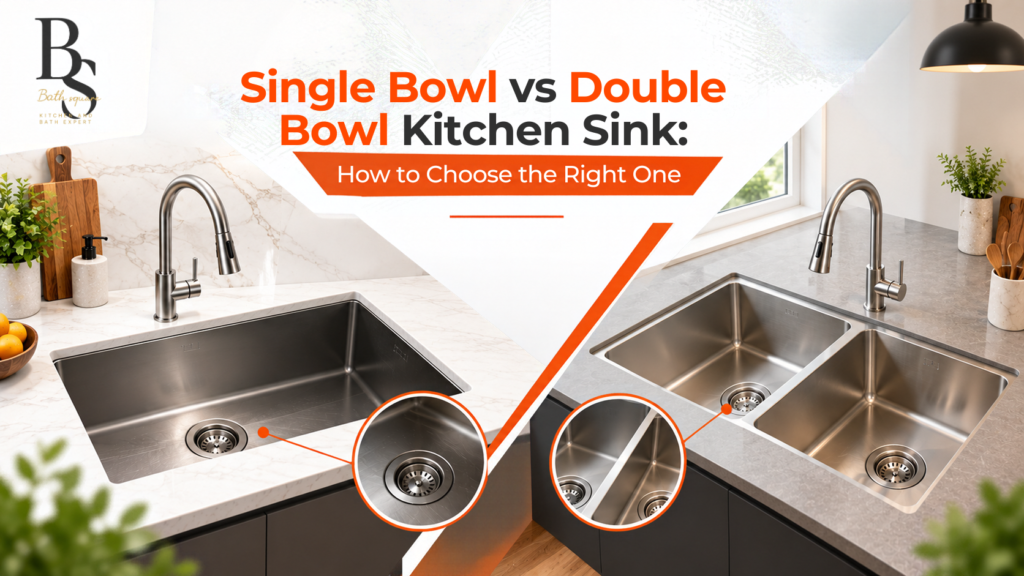
4. Single bowl or double bowl – Single bowl sinks give you more space for large vessels. Double bowl sinks let you wash and rinse simultaneously – great for busy kitchens. Think about how you actually cook before deciding.
5. Check colour carefully in your actual kitchen lighting – Darker colours like black and charcoal look stunning but show water spots more easily. Lighter colours brighten smaller kitchens but may show haldi stains more. Always see the colour in person – not just in catalogue photos.
6. Check warranty – A good quality quartz sink should come with at least a 5-year warranty against manufacturing defects. Carysil offers a 5-year warranty on their quartz sinks. Never buy a sink without asking about warranty.
7. Check installation type – Quartz and granite sinks come in top mount, under mount, and integrated styles. Under mount sinks look cleaner and are easier to wipe counter spills into the sink. Top mount is easier to install. Decide based on your kitchen design and budget.
Choose the Right Kitchen Sink with Balaji Bath Square
Looking for a durable and stylish quartz or granite kitchen sink for your home? Balaji Bath Square offers a wide range of premium kitchen sinks, including Carysil Kitchen Sinks, in different sizes, colours, and designs. Visit our showroom in Jaipur to compare options and find the right sink for your kitchen.
Conclusion
Choosing between a quartz and granite composite kitchen sink ultimately depends on your cooking habits, maintenance preferences, kitchen design, and budget. Both materials offer durability, a premium appearance, and better performance for modern Indian kitchens compared with traditional options.
Quartz kitchen sinks stand out for their smooth, non-porous surface, easy cleaning, stain resistance, and suitability for hard-water areas. Granite composite sinks offer excellent heat resistance, durability, and a natural stone-like appearance. Before making a decision, consider factors such as sink material, bowl depth, size, colour, installation type, warranty, and how frequently you handle hot and heavy utensils.